Etymology and history :
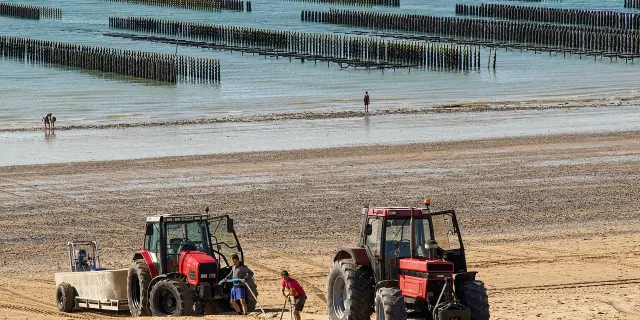
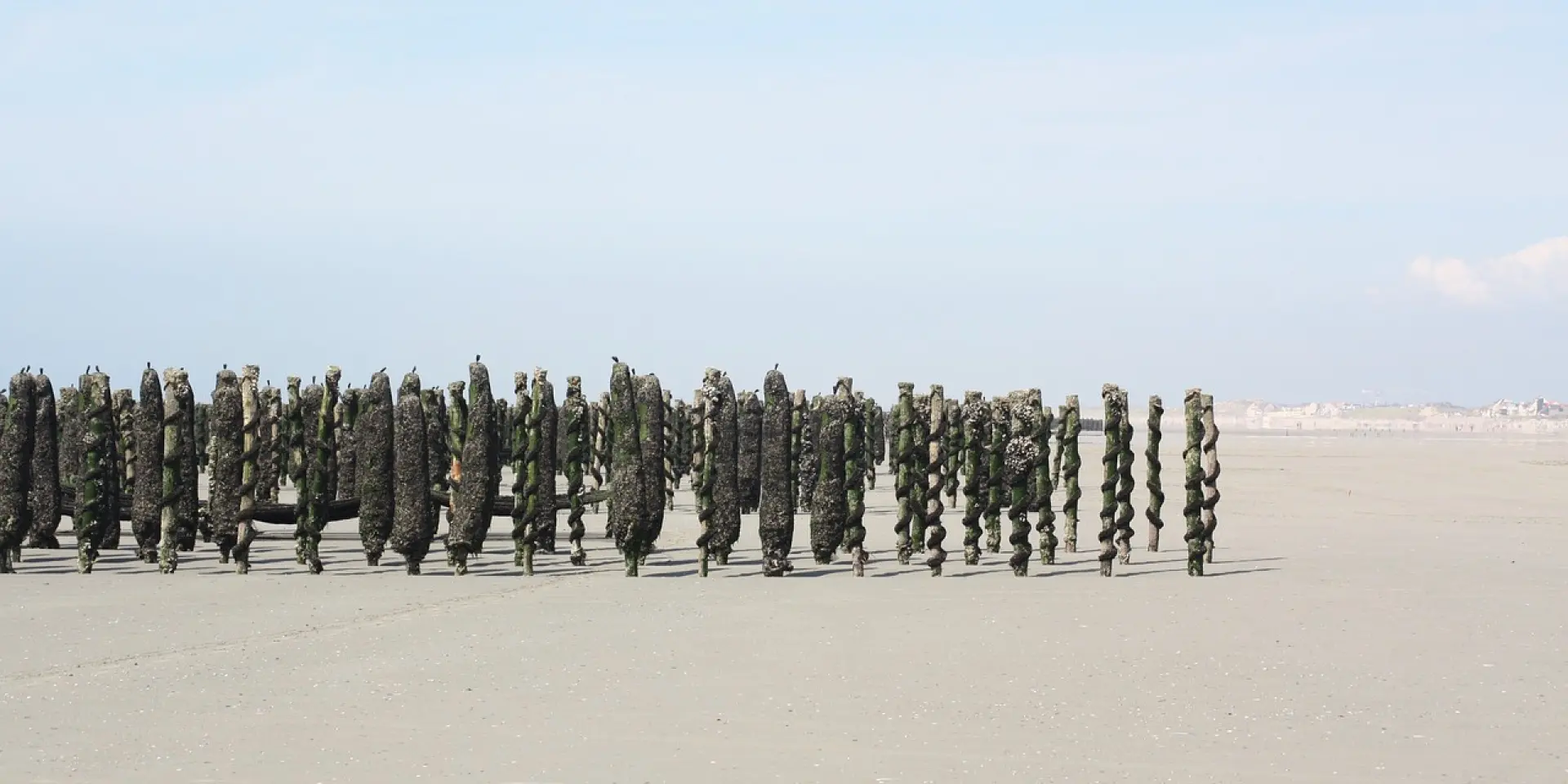
The term“bouchot” has its origins in an Old French word “bochot” meaning “stake”. Bouchot mussels are grown on wooden (or sometimes metal) stakes planted in the sand of the foreshore, which are underwater at high tide.
This method of growing mussels is said to date back to the 13th century. It is thought to have originated with the Benedictine monks, who were looking for a way to provide for their dietary needs while observing the fasting periods imposed by the Church.
Over the centuries, the cultivation of the bouchot mussel spread along the coasts of the English Channel and the Atlantic, from our beautiful Normandy to Charente-Maritime. Over time, seafarers adopted this method, which enabled more sustainable production and helped to protect marine resources.
In the 19th century, bouchot mussel cultivation developed considerably thanks to improved farming techniques and the industrialisation of production. Bouchot installations multiplied, creating jobs and providing a livelihood for entire regions.
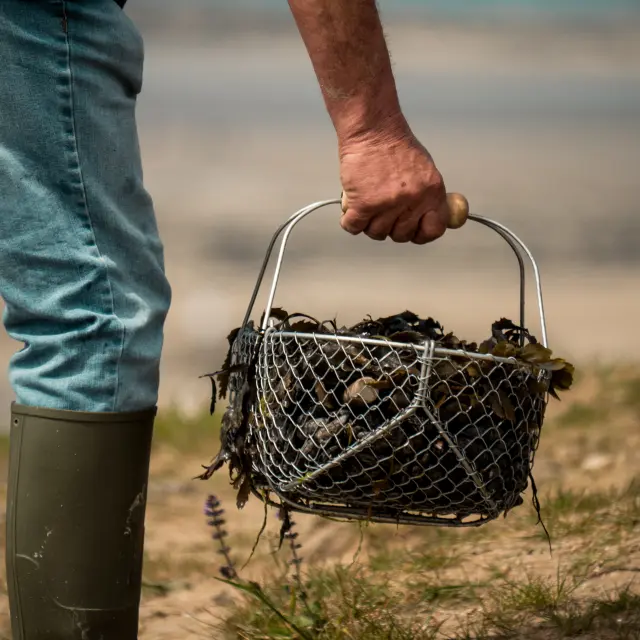
Mussel farmers are known as mytiliculteurs: they are responsible for growing and harvesting the mussels.
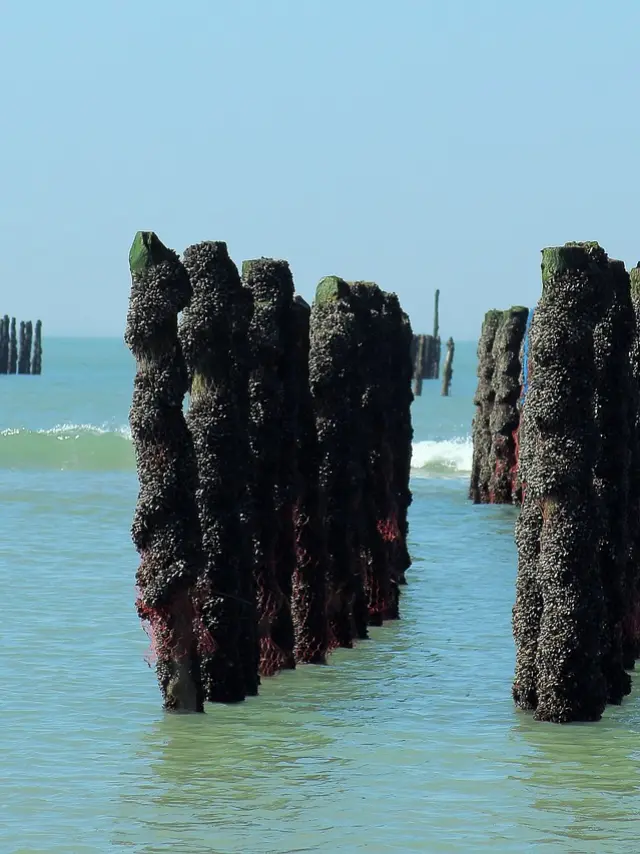
Wooden poles emerge from the sea, creating a unique natural spectacle.