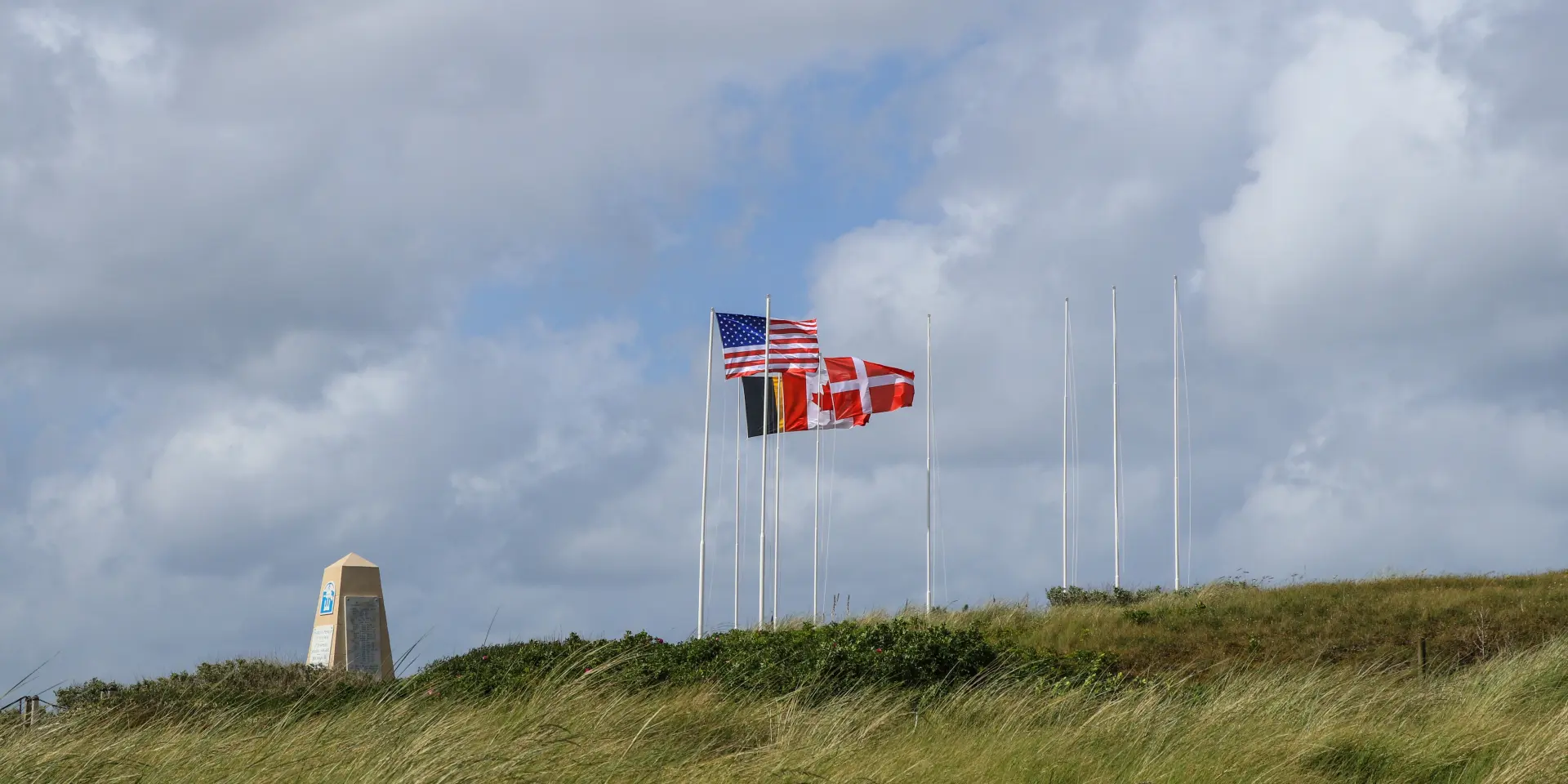
Three flags waving on a grassy area with a cloudy sky in the backgroundThree flags are visible, waving on white flagpoles. The first flag is that of the United States, the second is a black, white, and red flag with an emblem in the center, and the third is a red flag with a white cross. In the background, there is a cloudy sky and a concrete structure with illegible text.
©Flags of different countries proudly waving in the wind.|Estelle Hertault Cdt50
Unmissable in La Manche

Landing Beaches

The D-Day beaches, an open-air place of memory

On June 6, 1944, the Landing took place on the beaches of Normandy. This day and the weeks that followed were decisive for the outcome of the 2ndnde World War. Nowadays, these five beaches welcome millions of visitors each year who come to pay tribute to the soldiers who fought for freedom in 1944. The Basse-Normandie Region has launched a bid to have the D-Day landing beaches listed as a Unesco World Heritage Site.

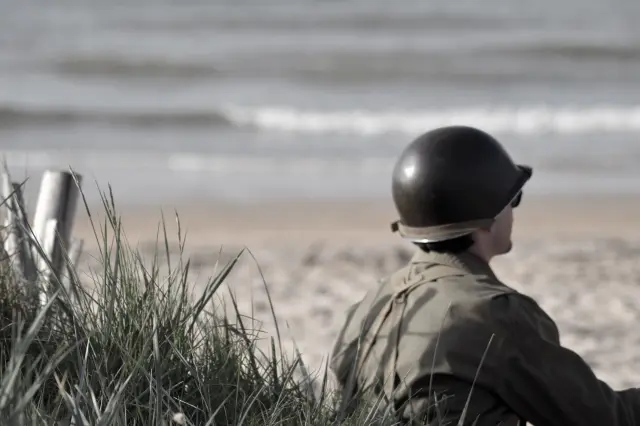
A soldier in military uniform gazes at the seaA soldier in military uniform is sitting on a beach, gazing at the sea. He is wearing a helmet and a blindfold. The background shows waves and sand.
©A soldier in military uniform gazes at the sea, sitting on a beach.

Five places that made history

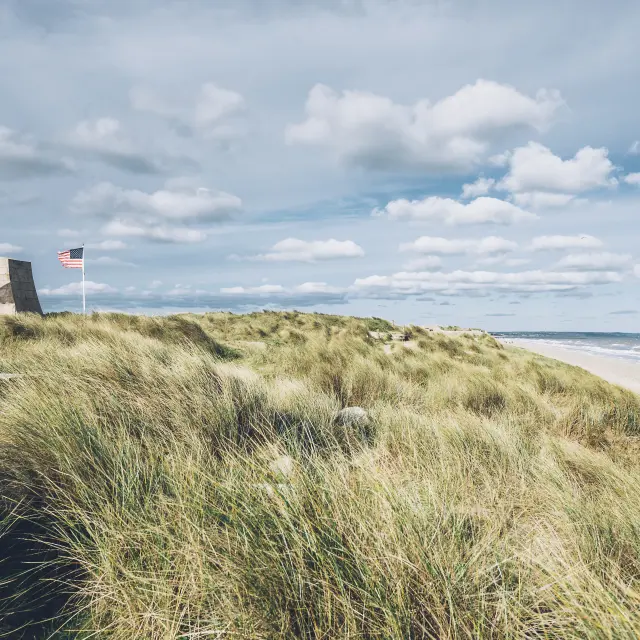
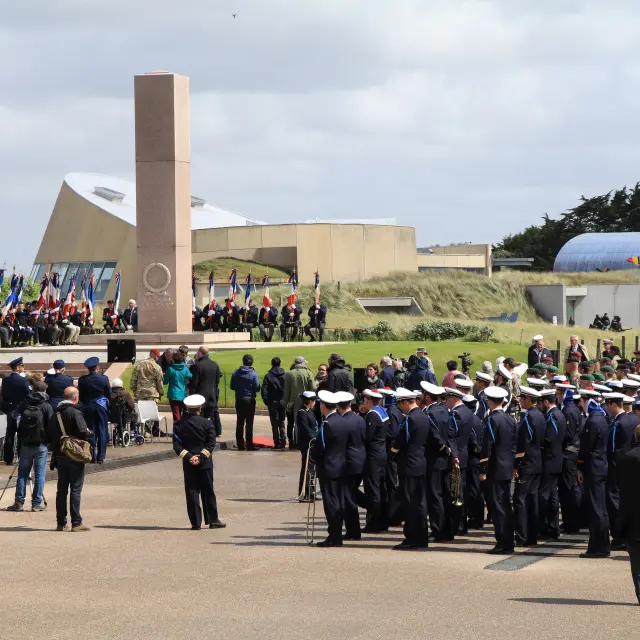
Utah, Omaha, Gold, Juno and Sword the five beaches of D-Day.

Utah Beach is the only beach located in the département of La Manche. Here, American troops intervened in order to recover the port of Cherbourg as quickly as possible.

Omaha beach is located in Calvados. The battles there were important and the American troops suffered heavy losses in this area on D-Day.

Gold Beach is where British troops deployed the artificial port of Arromanches in just a few days.

On Juno Beach landed 14,000 Canadian troops and 9,000 British troops off Bernières-sur-Mer and Courseulles-sur-Mer.

At Sword beach,this Franco-British sector saw the landing of the French Green Berets under the orders of Commander Kieffer on D-Day.
Did You Know?

The Allies led German forces to believe that the D-Day landings would take place in the Pas-de-Calais or in Norway through a disinformation and diversionary operation called “Fortitude.” In a second phase, this plan was also intended to make the enemy think that the Normandy Landing was only a diversionary landing so that they would not send reinforcements to that area. It was, however, the real Landing.

Utah Beach Landing Museum

Located at the very site where the D-Day landings took place on June 6, 1944, this museum details the events of D-Day through a comprehensive chronological tour. You can discover an authentic B26 bomber, this exceptional aircraft of which only a few remain in the world. This site commemorates the success of its soldiers who had the courage to mobilize for Freedom. Whether you take a guided tour or a self-guided tour, discover this exceptional and comprehensive site thanks to the many photos, veterans’ testimonies, films and reconstructions that are available throughout the visit.

The must-sees on your visit to the Landing Beaches

  • The five beaches
  • Utah Beach Musee du Débarquement
  • The Airborn museum in Saint-Mère-Eglise
  • The Azeville batteries
  • The Pointe du Hoc
  • The American cemetery of Colleville
  • Caen Memorial
  • Pegasus Memorial
  • The Juno Beach Center at Courseulles-sur-Mer
You will love

Other major attractions in the department