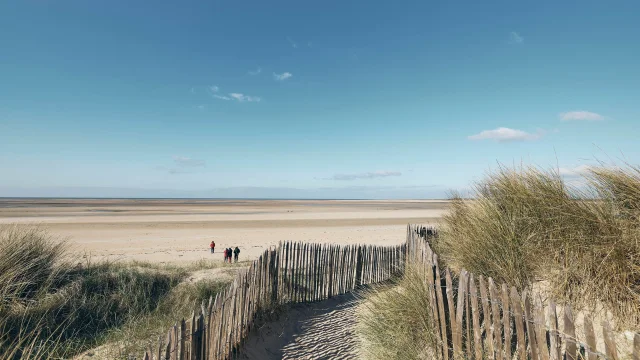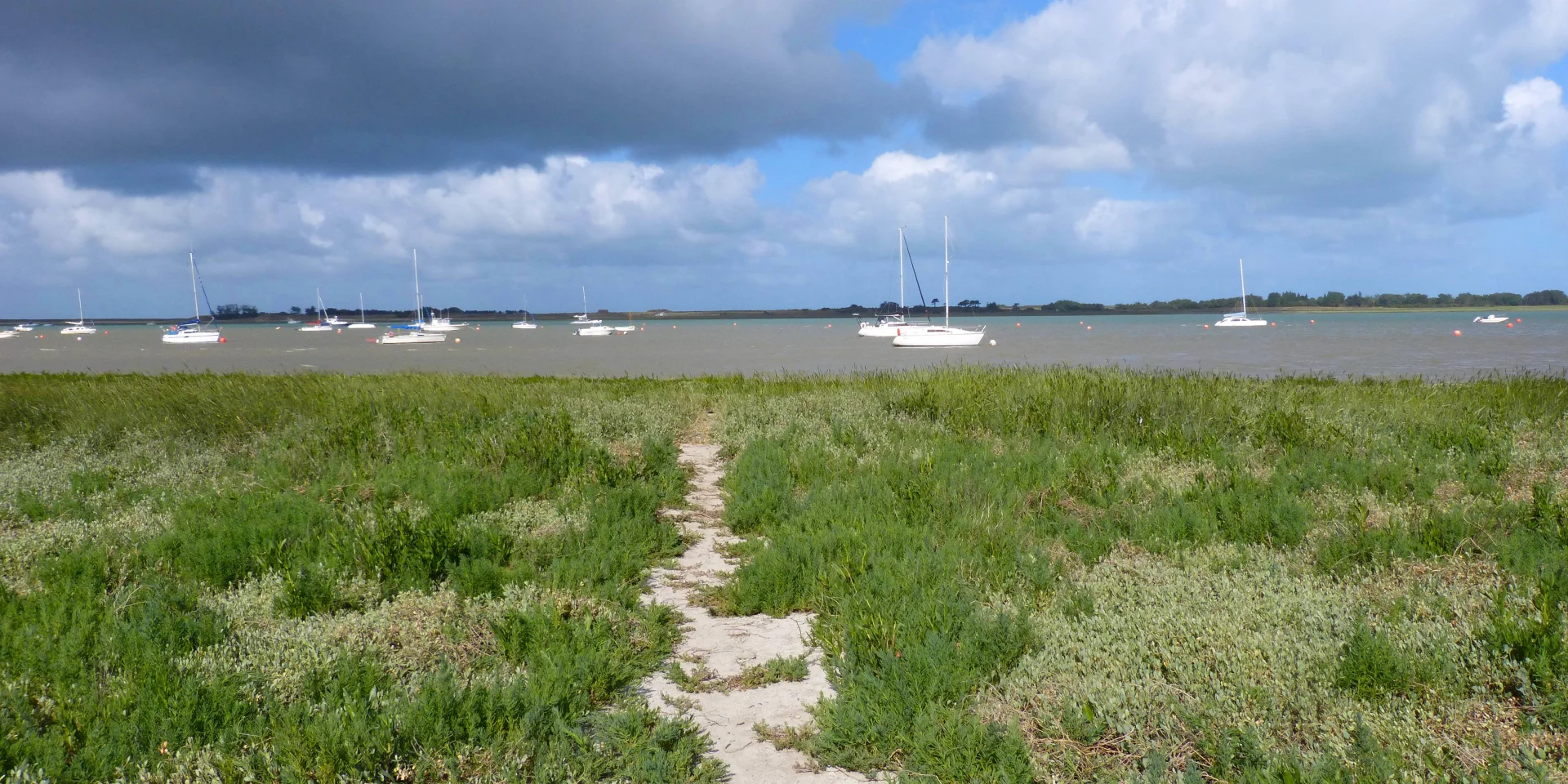
Sand path leading to a body of water with boats in the distanceA white sand path crosses a green expanse of grass leading to a calm body of water. Several boats are moored in the distance, with a cloudy sky in the background.
©A sandy path invites a walk towards the marine horizon.
3 surprising facts about

Glasswort

Glasswort: a natural treasure on the Normandy coast

Emblematic of salt meadows and seashores, glasswort is a small plant that grows with the rhythm of the tides.
Its appearance in spring marks the return of strolls along Normandy’s shores and invites you to discover a unique ecosystem. Both discreet and precious, it is as intriguing as it is seductive.

A plant at the heart of salt meadows: glasswort holds a few secrets

1# Its environment

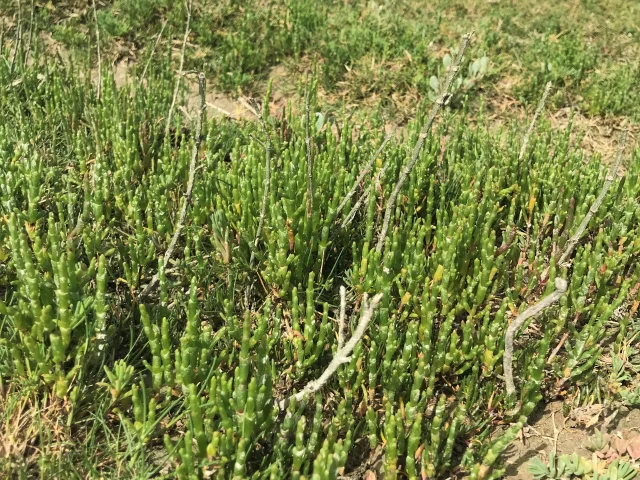
Glasswort is a small plant that grows in salty wetlands: salt marshes, mudflats, seashores, etc. that are regularly or occasionally covered by the sea. In Coutances mer et bocage, the harbours are perfect environments for this little green plant to flourish. It is a halophyte plant. In other words, it is adapted to salt-rich soils where few other plants can survive. Another plant in this category is the well-known Obione.
2# In the kitchen

Glasswort is an edible plant that is highly prized in the kitchen. It has a distinctive salty, crunchy and, of course, iodised taste. Its taste has been compared to a cross between asparagus and gherkin. It is rich in magnesium and iodine, which are good for your health. In the kitchen, it is eaten in a variety of ways:

  • Raw, in a salad, to add a touch of crunch and a salty flavour
  • As a condiment, with fish, seafood or white meats
  • Cooked, in soups or cream soups, or as a filling for pasta or pies.

An ecological role

Glasswort is a small plant that plays an important role in local seaside ecosystems. Its roots help to stabilise soil and maritime areas by limiting erosion caused by tides, wind and waves. This is crucial in balancing the areas between land and sea during tides. As it grows, it also provides protection for various species of tiny animals and food for crustaceans and birds. Finally, it plays a role in filtering seawater, helping to maintain the balance of seawater ecosystems.

Regulations

Collecting glasswort is highly regulated. Picking is authorised under a prefectoral decree, which should be consulted before setting out to collect it. Picking is generally permitted from 1 June to 31 August, from sunrise to sunset. The quantity per day and per person is limited to what an adult man’s 2 hands can hold. Only knives and chisels are permitted, no other tools. The cutting height is 6cm above the ground, and uprooting is strictly forbidden . Harvesting is authorised along the entire coastline, with the exception of the Beauguillot reserve zone (Baie des Veys). Be sure to check the latest decrees before going there. You may not sell your seashells for a fee, and they may only be harvested for personal consumption.

Other articles to discover

We're off to the seaside!